⏱️ Reading time: 9 min
What is ADHD in Adult Life Really?
Attention-Deficit/Hyperactivity Disorder (ADHD) in adult life is not a simple lack of willpower or personal disorganization. It is a complex neurobiological condition with strong genetic bases that profoundly affects the brain’s management system, known as executive functions. Contrary to common perception, ADHD does not disappear in adulthood – it transforms. While the typical motor hyperactivity of childhood may give way to an internal restlessness, challenges with attention, emotional regulation, and impulse control often intensify in the face of the complex demands of adult life, such as career management, relationships, and finances.
🧭 “This content is part of our series on Mental Disorders: A Guide to Understanding, Recognizing, and Seeking Help.” 👈 (Click here)
Understanding mental disorders is the first step in transforming suffering into a path of healing and self-knowledge.
The Brazilian Association of Attention Deficit (ABDA) emphasizes that adult ADHD is underdiagnosed and often masked by comorbid conditions like anxiety and depression. Many adults spend their lives trying much harder than others to achieve average results, carrying an invisible burden of self-accusations like “lazy,” “scatterbrained,” or “incompetent.” Understanding ADHD as a real difference in brain architecture, and not a character flaw, is the fundamental first step toward self-compassion and the pursuit of effective strategies.
The Neuroscience of the Restless Mind: Beyond a Lack of Attention
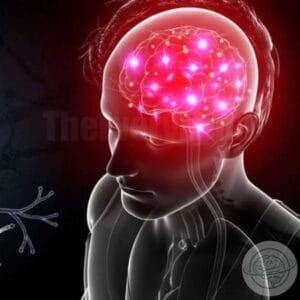
The adult brain with ADHD presents measurable particularities in its structure and chemistry. Neuroimaging research consistently shows differences in the development and activation of neural networks crucial for self-control, planning, and sustained attention. The prefrontal cortex, which acts as the “CEO of the brain,” often shows slower maturation and lower activity in people with ADHD. This region is primarily responsible for executive functions, a set of management skills that include focus, inhibitory control, organization, planning, and emotional regulation, as we detailed in Executive Functions: The Brain’s Control Center.
From a neurochemical standpoint, there is a consensus that ADHD is related to an imbalance in the dopamine and norepinephrine systems. These neurotransmitters are essential for reward signaling, motivation, alertness, and stimulus filtering. A low level of dopamine, for example, leads the brain to constantly seek new stimuli to self-regulate, explaining the tendency toward procrastination, novelty-seeking, and difficulty engaging in monotonous but important tasks. This chemical imbalance is one of the pillars that also underpins other disorders, as we explored in Neurotransmitters of Well-Being: The Emotional Chemistry.
The Multiple Signs: Beyond Distraction and Hyperactivity
Adult ADHD manifests through a central triad of symptoms – inattention, hyperactivity, and impulsivity – that take on specific characteristics in adulthood.
Symptoms of Inattention:
- Difficulty with Sustained Focus: Easily distracted by external stimuli or one’s own thoughts, abandoning tasks halfway through.
- Lack of Attention to Detail: Makes careless mistakes at work or in other activities.
- Difficulty with Organization and Planning: Great challenge in managing time, prioritizing tasks, and meeting deadlines. The work desk and personal life can be chaotic.
- Chronic Procrastination: Difficulty initiating boring or complex tasks, even while aware of their consequences.
- Frequent Forgetfulness: Misplaces objects easily, forgets appointments, deadlines, and daily obligations.
Symptoms of Hyperactivity-Impulsivity (Adult Form):
- Internal Restlessness: Feeling “wired” or having “an internal motor,” even when appearing still externally.
- Difficulty Relaxing: Constant feeling of boredom and need to always be doing something.
- Impulsivity: Difficulty thinking before acting or speaking, which can lead to impulsive spending, abrupt changes of plans, or interrupting others.
- Sensation Seeking: May engage in risky behaviors (speeding, extreme sports) to alleviate the feeling of boredom.
- Low Frustration Tolerance: Irritability and quick emotional outbursts in the face of obstacles or criticism.
Demystifying Adult ADHD: Separating Fact from Fiction
One of the biggest obstacles to diagnosis and treatment is the web of myths surrounding the disorder. A common and harmful misconception is believing that “ADHD is a childhood condition.” It is estimated that about 60% of children with ADHD will continue to have significant symptoms in adulthood, impacting their professional, academic, and social lives.
Another persistent myth is that “the person is only inattentive with things they don’t like.” In fact, one of the most striking traits of ADHD is hyperfocus – the ability to concentrate intensely for hours on activities that are highly stimulating and rewarding. The problem is the lack of control over focus, not a lack of focus itself. The person cannot voluntarily direct this attention to necessary but routine tasks.
The idea that “ADHD medication is a ‘obedience drug’ or causes dependency” is also false. Medications, when prescribed and monitored by a psychiatrist, work by normalizing neurotransmitter function, “turning on the light” in the prefrontal cortex. They do not alter personality but allow the person to access their own cognitive capacities. At therapeutic doses, the risk of dependency is low.
The Path to Balance: Strategies for a Better-Managed Brain
Specialized Professional Interventions
Effective management of adult ADHD often requires a multimodal approach. Psychiatric follow-up is fundamental for diagnostic assessment and for the possible use of medication, which can provide the necessary neurochemical foundation of stability for other strategies to work.
Recommended Readings
Executive Functions: The Brain’s Control Center
Discover executive functions, the CEO of your brain. Learn how inhibitory control, working memory, and cognitive flexibility govern your life and how to strengthen them.

Neuroplasticity: Your Brain Can Renew Itself
Discover the power of neuroplasticity. Learn how your brain renews itself and how to stimulate this capacity to improve learning and mental health.

Premenstrual Dysphoric Disorder: Beyond PMS
Understand Premenstrual Dysphoric Disorder (PMDD), its symptoms and treatments. Go beyond common PMS and find relief.
Psychotherapy is another crucial pillar. Cognitive-Behavioral Therapy (CBT) adapted for ADHD is highly effective. It does not “cure” ADHD but teaches practical skills in organization, planning, and emotional regulation. It helps the patient identify and modify dysfunctional thought patterns (such as excessive self-criticism) and develop external systems to compensate for internal difficulties.
Practical Self-Management Strategies
Alongside professional treatment, the implementation of externalizing tools and routines is transformative. The ADHD brain needs external support to function optimally.
- Everything Out of Your Head: Use agendas, apps, lists, and alarms to free up overloaded working memory.
- Break Tasks into Micro-steps: Large projects are paralyzing. Breaking them down into minimal, concrete steps makes them less intimidating and more achievable.
- Pomodoro Technique: Work in short time blocks (e.g., 25 minutes) with scheduled breaks to maintain focus and manage restlessness.
- Designate Specific Places: Have a fixed place for keys, wallet, documents to combat forgetfulness.
- Mindfulness Practice: Training attention for the present moment, without judgment, strengthens the “muscle” of focus and helps manage impulsivity and emotional regulation, a skill we delve into in Mindfulness: Finding Peace in the Present Moment.
Practical Exercise: The 5-Minute Check-In
This exercise is designed to be performed three times a day (morning, afternoon, evening) and helps bring the mind back on track, increasing awareness of the present moment and priorities.
- STOP and BREATHE (1 minute): Wherever you are, interrupt what you are doing. Sit with your feet on the floor. Close your eyes and take three deep, slow breaths, focusing only on the sensation of the air moving in and out.
- CHECK your INTERNAL STATE (1 minute): Do a quick body and emotional check. Ask yourself: “How am I feeling physically? (Tired? Restless?)” and “How am I feeling emotionally? (Anxious? Frustrated? Overwhelmed?)”. Just observe and name, without judgment.
- REVIEW your 3 PRIORITIES (1 minute): Mentally, review what the three main priorities were that you had set for this time of day (morning, afternoon, or evening). This helps refocus on what is essential, combating attention drift.
- IDENTIFY the NEXT STEP (1 minute): Choose one single, small physical action you can take now to advance one of your priorities. Be specific (e.g., “Write the first two paragraphs of the report,” “Call to schedule the doctor’s appointment,” “Wash the lunch dishes”). Write it down if necessary.
- ELIMINATE one DISTRACTION (1 minute): Identify the main distraction around you (phone, browser tab, clutter on the desk) and take a physical action to minimize it for 25 minutes. It could be putting your phone on airplane mode, closing the unnecessary tab, or putting one item out of place.
Living with adult ADHD is like driving a Formula 1 car with bicycle brakes. The mind is powerful, fast, and creative, but the management and braking system is fragile. The journey of “taming the restless mind” is not about becoming someone else, but about learning to pilot the unique vehicle you have. It’s about building more effective brakes, a clearer navigation map, and strategic pit stops. Every tool implemented, every small organizational ritual, every moment of self-compassion instead of self-criticism, is an adjustment in that piloting. The goal is not perfection, but direction – using the intensity, creativity, and energy of your brain to your advantage, instead of being driven by it.
Have you ever felt like a Formula 1 driver trying to brake with limited resources? If you identify with this, share in the comments: which of the 5 steps of the “Checkpoint” (stop and breathe, check your internal state, review priorities, identify the next step, or eliminate a distraction) do you think would be the most transformative in bringing more clarity and control to your routine?
To delve deeper, check out these references:
- American Psychiatric Association. (2013). Diagnostic and Statistical Manual of Mental Disorders (5th ed.). Diagnostic criteria for ADHD.
- Brazilian Association of Attention Deficit (ABDA). (2023). ADHD in Adults: Guidelines and Recommendations. Reference material for diagnosis and management.
- Barkley, R. A. (2020). Taking Charge of Adult ADHD. Evidence-based reference work for the self-management of adult ADHD.
You have completed this structured journey of knowledge. Self-awareness is continuous. This understanding of mental disorders continues to evolve at TheEveryMind. Soon, new articles will join this Core Guide. To explore all our themes, go to Menu > Core Guides.
For a comprehensive and integrated overview of how various disorders connect and impact life, check out our complete guide: Mental Disorders: A Guide to Understanding, Recognizing, and Seeking Help.